Good morning, and welcome to the Wednesday email.
Three GLP-1 stories this week, and each one has a catch. The FDA, a team of researchers and a drug label each had news. Each story links to the full article if you want the rest.
The eye warning on every GLP-1
On 9 November 2026 the FDA ordered a new warning for every GLP-1 drug. It is about NAION, a rare eye condition.
In 126 trials it was rare: 6.4 cases per 100,000 patient-years on GLP-1 drugs, against 3.8. The FDA calls the risk "potential." Nobody knows how the drugs could cause it.
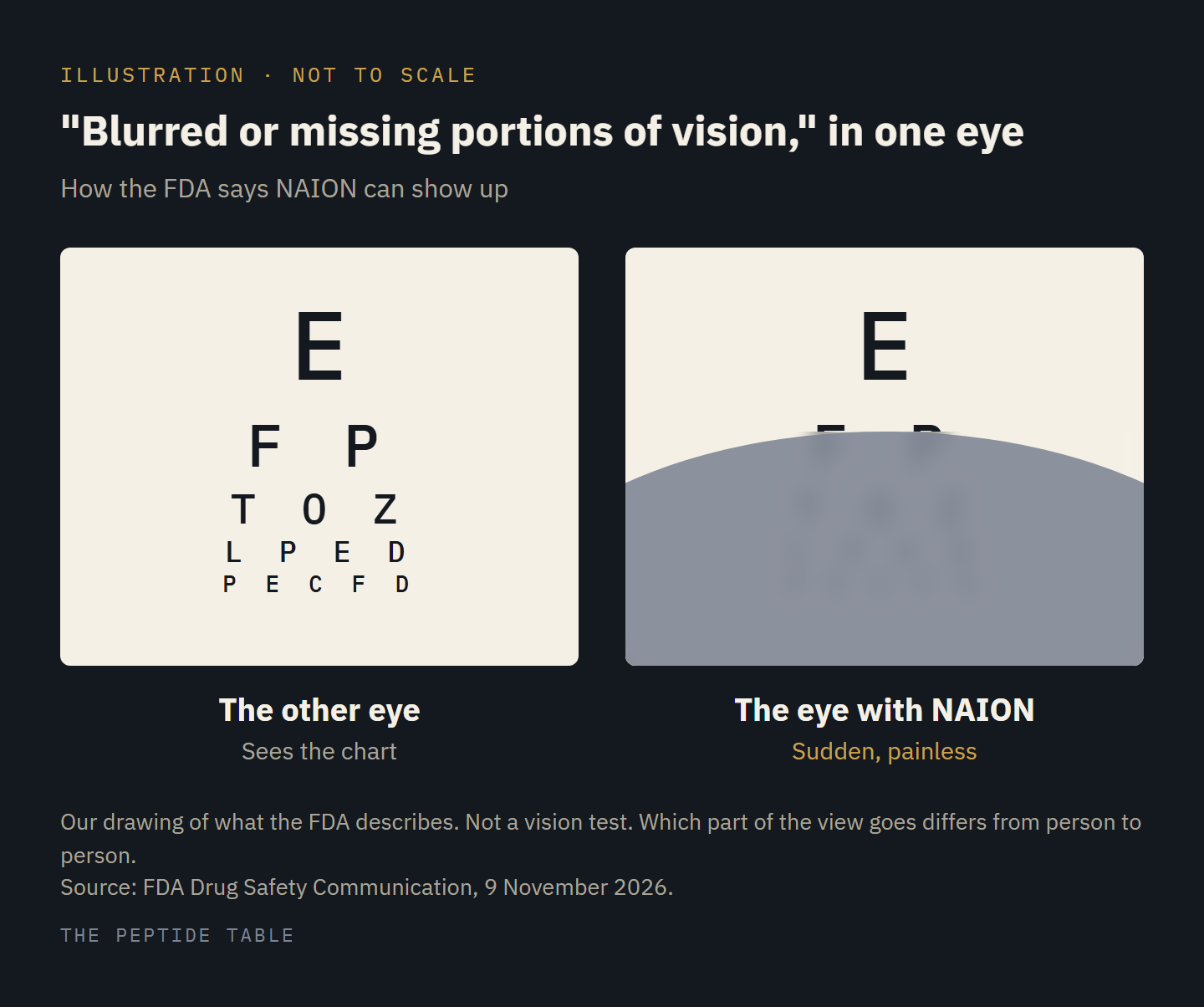
The fine print: the Zepbound label in the FDA's data did not mention NAION yet when we looked.
Read it: Ozempic and Mounjaro Get an FDA Vision Loss Warning
What stopping looked like in a study
Italian records of 80,302 people with type 2 diabetes were studied. Those who stopped a GLP-1 had about twice the rate of heart attack, stroke or death.
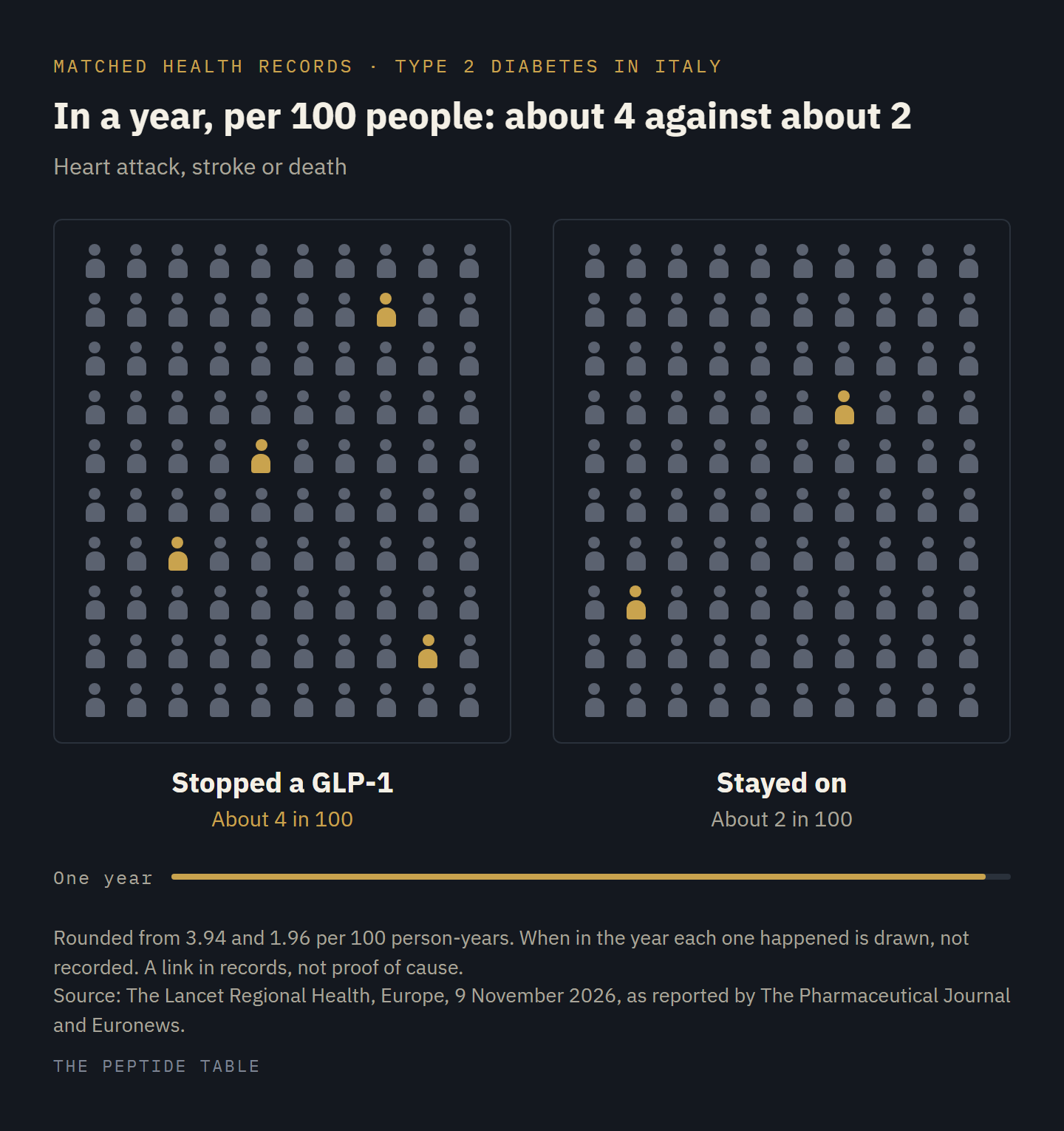
The authors say the gap is "unlikely to be explained solely by withdrawal" of the drug.
The fine print: most people took older GLP-1 drugs. Tirzepatide was not in the study.
Read it: Stopped a GLP-1? Heart Attack, Stroke or Death Doubled
Zepbound and hair loss
Zepbound's label lists hair loss among its most common side effects.
In two trials, 4 or 5 in 100 people on Zepbound lost hair. On placebo it was 1 in 100.
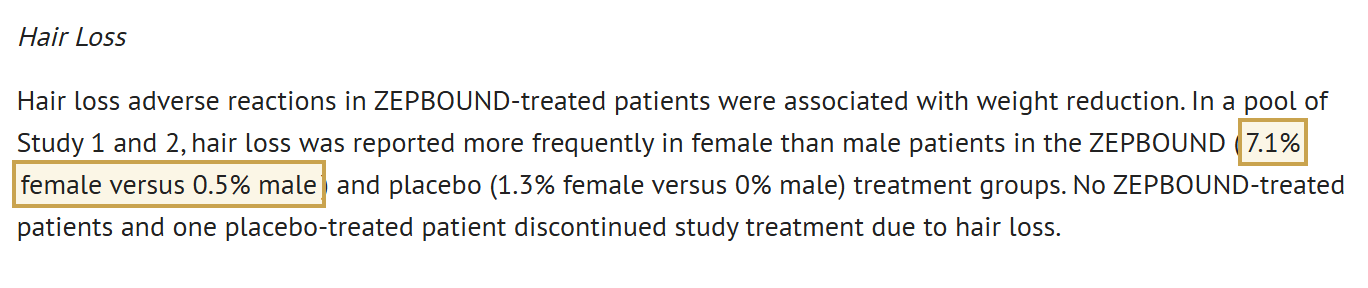
Why it matters: we found no line on whether the hair grew back.
Read it: Zepbound Hair Loss: 7 in 100 Women, Under 1 in 100 Men
Every compound we track, with its grade and its sources, is on the Table.
Open the TableThat's the week. See you next Wednesday.
Ask better questions.
The Peptide Table