Good morning. Three stories this week, and one question runs through them: who checked? A coroner read the medical records of one death. A drug maker reported its own trial. A UK study counted problems in 47,039 surgery patients. Each story links to the full article if you want the rest.
A peptide shot, then a fatal reaction
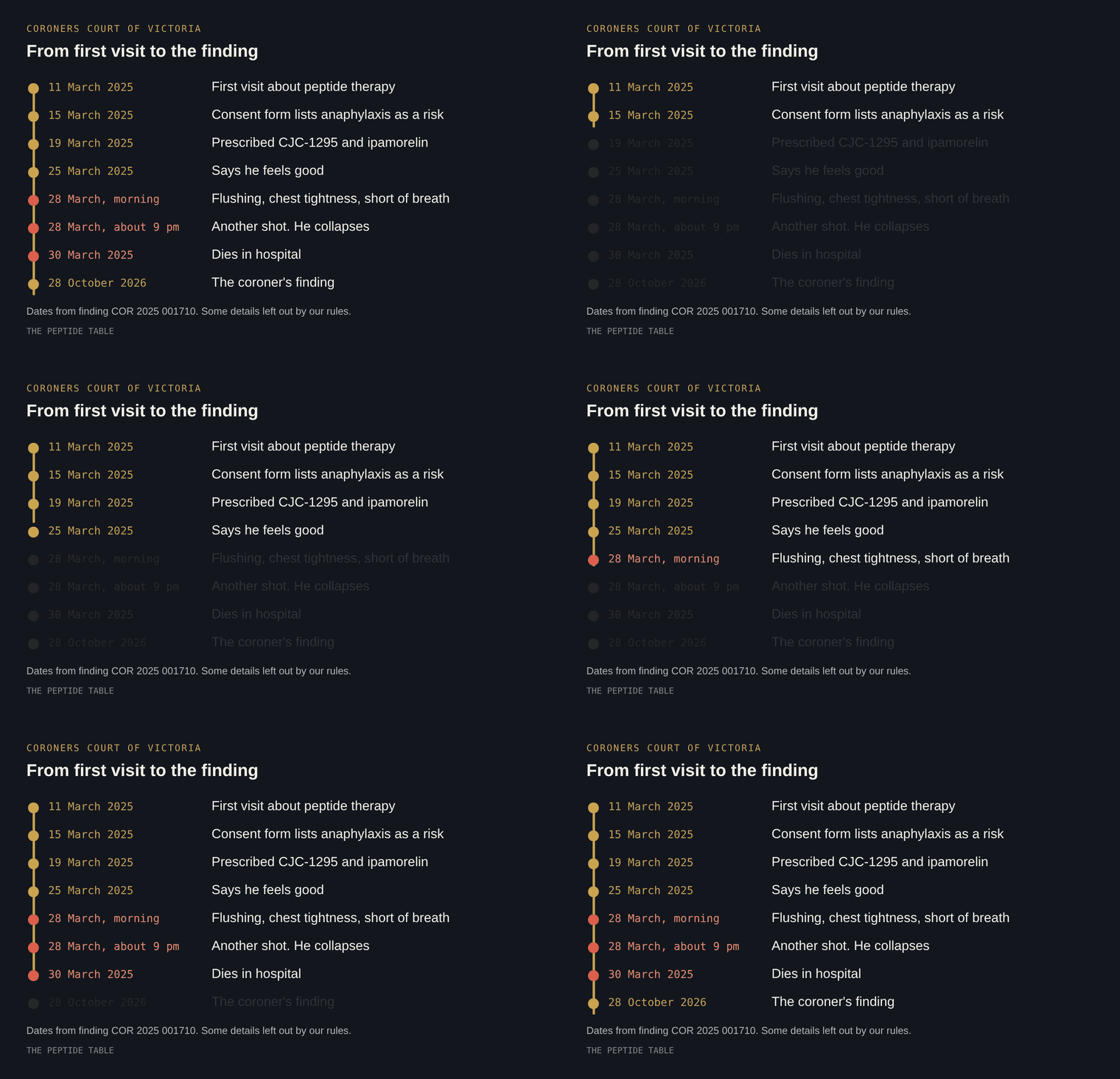
An Australian coroner found that a shot of CJC-1295 and ipamorelin triggered the death of actor Richard Norton, 75. The finding says the shot "caused an anaphylactic reaction which in turn led to cardiac arrest." He had flushing all over his body for days before. The peptide came through a prescription and a licensed compounding pharmacy. The post-mortem tests could not detect the specific peptides.
The fine print: the finding covers one death. He had asthma and a heart condition, which may have contributed.
Retatrutide won. More people quit.
Eli Lilly says retatrutide beat Ozempic on blood sugar and weight in a head-to-head trial. Weight fell 20.9 percent in the higher-dose group, against 9.4 percent on Ozempic. But 7.9 percent of that group stopped because of side effects. On Ozempic, 2.7 percent did.
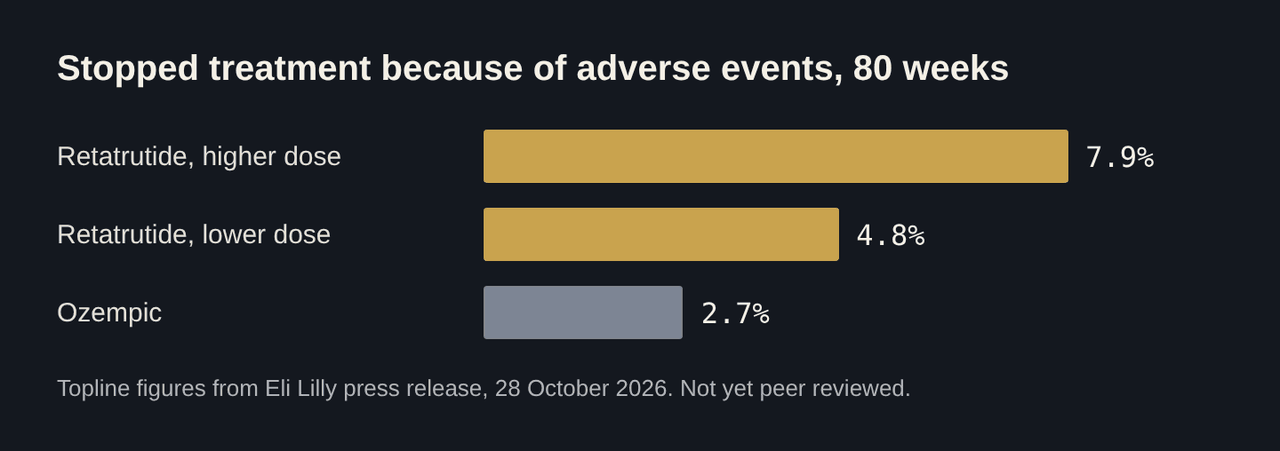
The fine print: every number comes from Lilly's own release. The full paper is not out.
Read it: Retatrutide Beat Ozempic. More Quit Over Side Effects.
GLP-1 drugs and the operating room
A UK study looked at 47,039 patients having anaesthesia. In those on GLP-1 drugs, stomach contents came up or reached the lungs in about 1 in 71. In everyone else, it was about 1 in 802. It happened most often as people woke up.
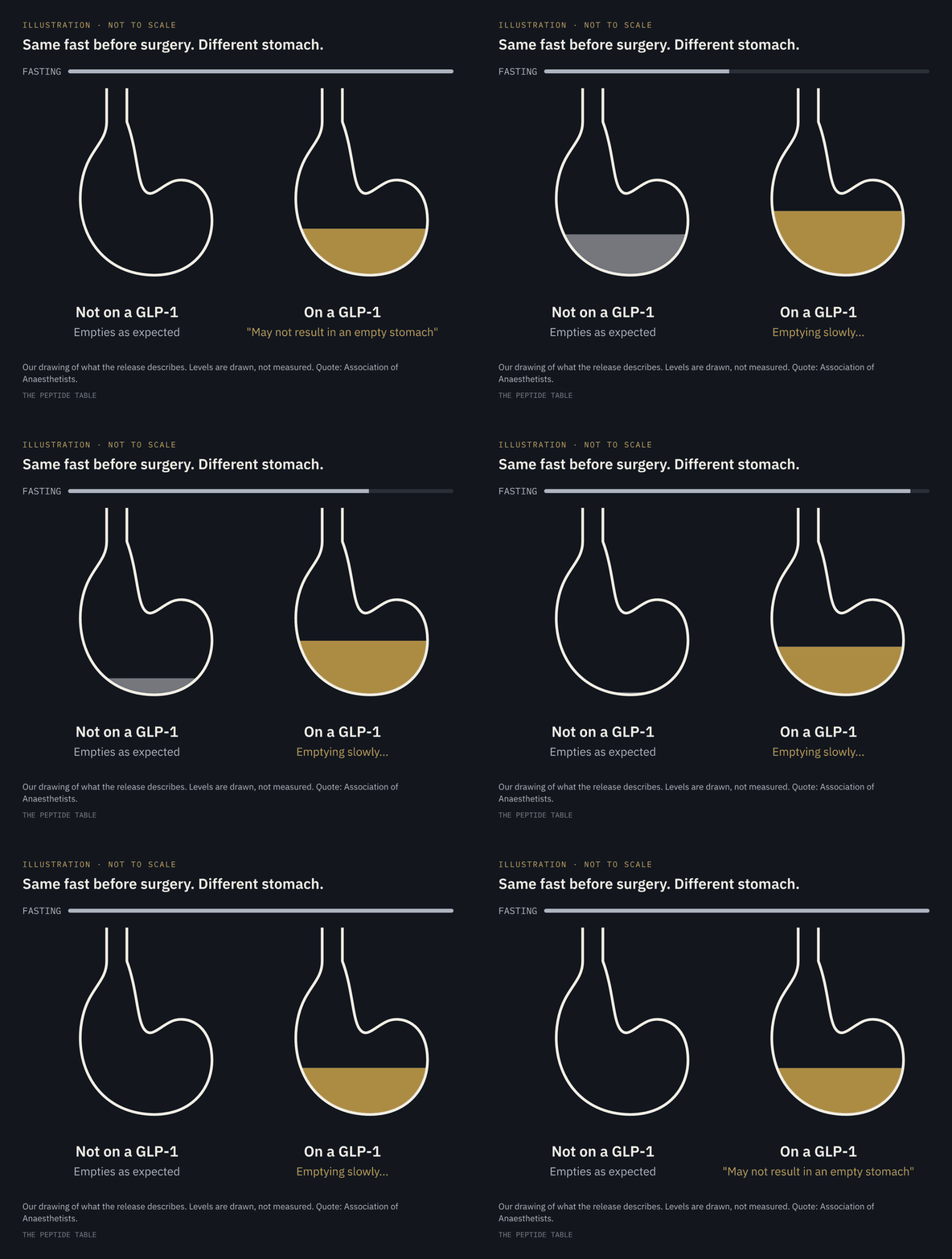
Why it matters: the drugs slow the stomach. The authors say obesity and diabetes may explain part of the gap, and the study cannot prove cause.
Read it: Fasted for Surgery on a GLP-1? Your Stomach May Not Be Empty
Every compound we track, with its grade and its sources, is on the Table.
Open the TableThat's the week. See you next Wednesday.
Ask better questions.
The Peptide Table