This week three documents asked the same thing: what is in the vial, and who decides? A study, a White House listing and an Australian lab each gave part of the answer.
234 reports on suspected fake semaglutide
Researchers in Italy pulled every European safety report that named a suspected fake semaglutide product, from 2018 to 2025. They found 234. Of those, 89.3% were marked serious, against 66.7% of other semaglutide reports. Seven listed death as an outcome.
Low blood sugar showed up in 7.4% of the suspected-fake reports, against 1.1% of the rest.
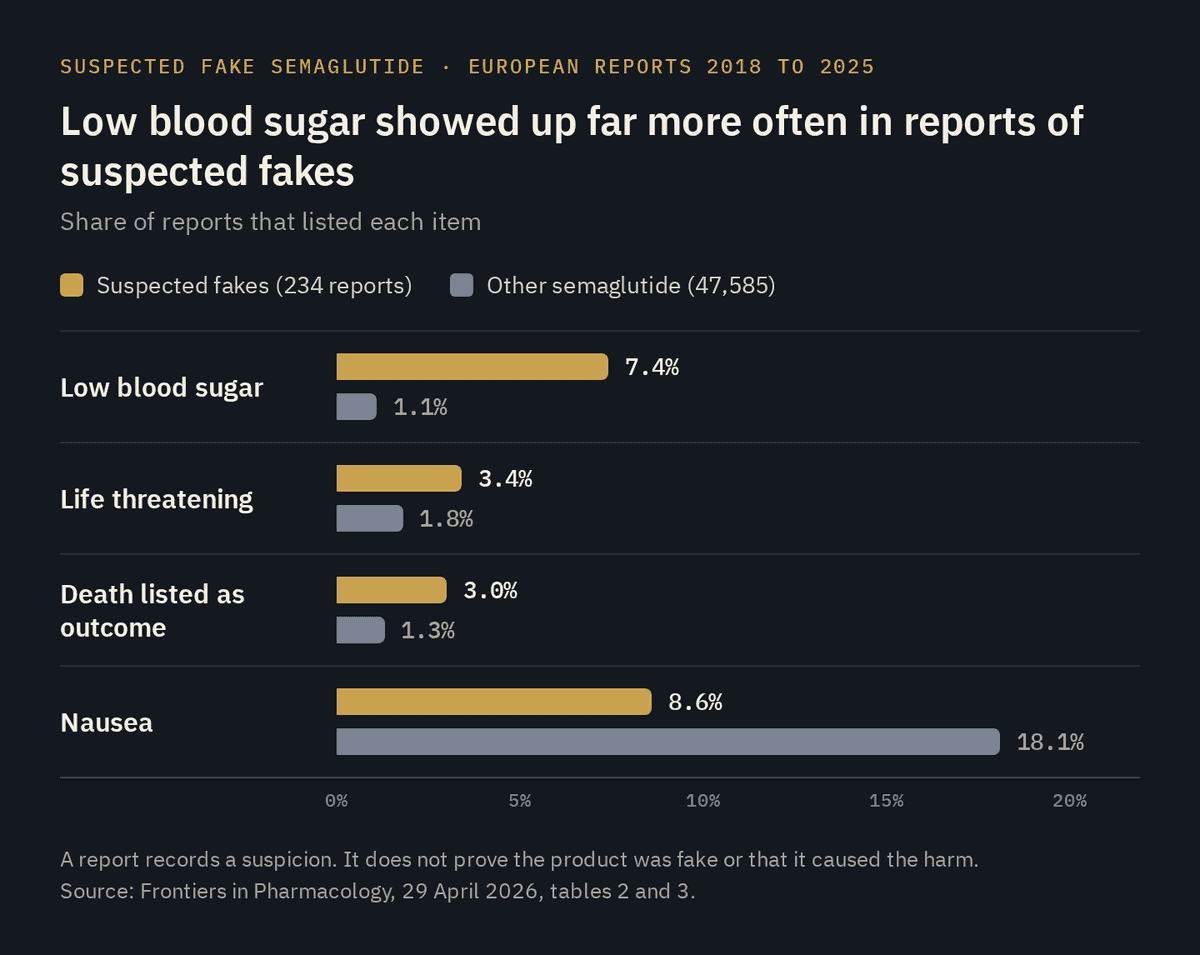
The fine print: a report records a suspicion. Nobody tested these products, and no rate can be worked out.
Read it: Suspected Fake Semaglutide: 89% of Reports Were Serious
A peptide plan you can't read
On 14 October the FDA sent an "Interim Access Policy for Compounding Using Certain Peptides" to the White House office that reviews rules. The public listing shows a title, a stage and a date. It shows no text and no list of peptides.
In July an FDA panel backed six peptides by narrow votes, BPC-157 among them. A news report says the FDA's own scientists had recommended against all seven.
Why it matters: the panel's advice binds nobody, and the FDA's next step on peptides is a text the public cannot read yet.
Read it: A Peptide Plan Went to the White House. You Can't Read It.
The vial said nothing. The lab found semaglutide.
A person in Australia used a product sold as retatrutide and was treated in hospital for a torn oesophagus. The regulator tested the unmarked vial. It held "undeclared semaglutide and no retatrutide", at about 8 times the level in approved products.
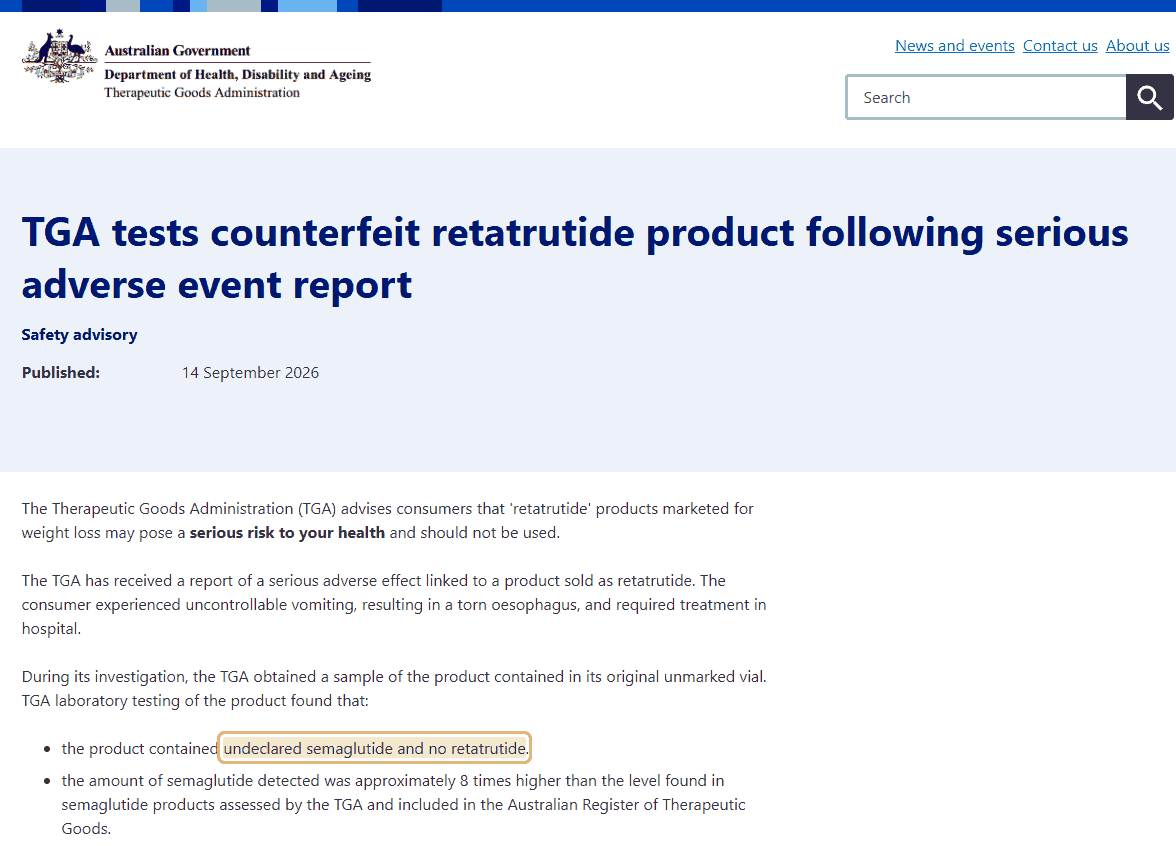
Victoria had already tied six cases of acute liver injury to products labelled retatrutide. It warned that "all such products are at risk".
Read it: Sold as Retatrutide. The Lab Found Semaglutide Instead.
Ask better questions.
The Peptide Table